How Do You Know That You Are Speaking in Tongues
10 Things to Know about Speaking in Tongues
- Pastor, Author
- 2019 29 Jan
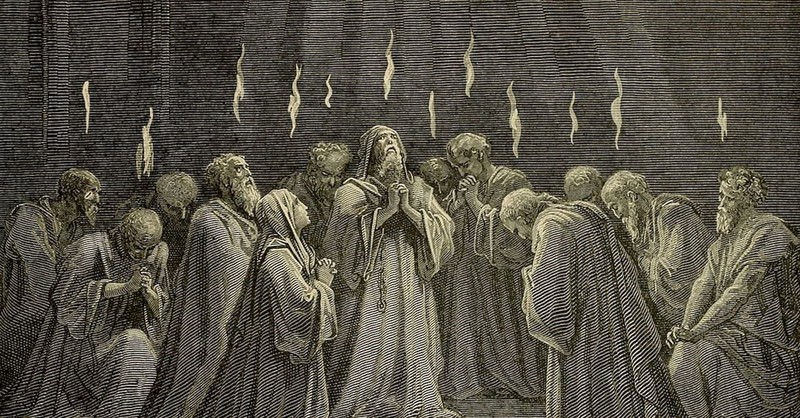
The spiritual gift of speaking in tongues remains controversial in our day and is a subject deserving of our close attention. This curt article is not designed to fence that tongues are still valid simply simply attempts to describe the nature and function of tongues speech.
Photograph courtesy: Wikimedia Commons

#1: The "tongues" spoken on the Day of Pentecost were real man languages.
The variety of nations represented (vv. 8-11) would certainly confirm this. The discussion "language" (vv. 6, viii) =dialekto = dialect (cf. Acts one:nineteen; 21:40; 22:2; 26:14). Can this miracle still occur today? Admittedly, yes. But in my opinion it happens quite rarely.
Some insist that the tongues in Acts two were not human languages. Acts two describes not the hearingof ane'south own language merely the hearingin one's own language. At the same moment that "other tongues" were spoken through the Holy Spirit, they were immediately translated past the same Holy Spirit into the many languages of the multitude (J. Rodman Williams,Renewal Theology, two:215). Thus, there is both a phenomenon of "speech"—other, different, spiritual tongues—and a miracle of "understanding," each facilitated by the Holy Spirit.
Photo courtesy: ©Wikimedia Commons

If this view is correct…
a miraculous charisma of the Holy Spirit (namely, the souvenir of interpretation) was given to every unbeliever present on the twenty-four hour period of Pentecost. But information technology is Luke'southward purpose "to associate the descent of the Spirit with the Spirit'due south action among the believers, not to postulate a miracle of the Spirit among those who were yet unbelievers" (Carson,Showing the Spirit, 138). Or, as Max Turner puts it, surely Luke "would non wish to suggest that the apostolic band only prattled incomprehensibly, while God worked the nonetheless greater miracle of estimation of tongues in the unbelievers" (The Holy Spirit and Spiritual Gifts, 223).
Photo courtesy: ©Thinkstock

#two: The souvenir of speaking in tongues can include "heavenly" dialects.
The gift of speaking in tongues that continues throughout church building history and is so widespread today is the Spirit-prompted ability to pray and praise God in a heavenly dialect, possibly even an angelic language that is not related to anything spoken on earth such as German or Swahili or Mandarin or English. The Holy Spirit personally crafts or creates a special and unique linguistic communication that enables a Christian to speak to God in prayer, praise, and thanksgiving. This gift is non a human language that one might come across in some strange country, but a Spirit-empowered capacity to speak meaningful words that are only understood by our Triune God: Father, Son, and Holy Spirit (unless, of course, God provides the interpretation through the i speaking or through another believer.
Photo courtesy: ©Thinkstock

#3: In that location is no testify that tongues-speech in Acts ii (or elsewhere) served an evangelistic purpose.
The content of tongues-speech was "the mighty deeds of God" (Acts 2:11; 10:46; nineteen:17). People don't hear an evangelistic message but doxology or worship. So, again, how can tongues be evangelistic when the merely two occurrences of tongues outside of Acts 2 (Acts 10 and nineteen) took place when only believers were nowadays? Neither is tongues the invariable sign of Spirit-baptism or Spirit-filling. There are numerous instances in Acts of true conversion and Spirit-baptism where no tongues are mentioned (2:37-42; 8:26-40; nine:1-19; 13:44-52; 16:eleven-xv; 16:25-34; 17:1-10a; 17:10b-15; 17:16-33; 18:1-eleven; 18:24-28).
Photo courtesy: ©Unsplash

#four: Speaking in tongues is prayer, praise, and self-edification.
Paul says that the 1 who speaks in a tongue "speaks not to men but to God" (1 Cor. 14:2). This means that tongues is a form ofprayer. Encounter especially 1 Cor. 14:14. Tongues is as well a form ofpraise (i Cor. xiv:15) and a way in which nosotros requitethanks to God (1 Cor. 14:16-17).
Tongues is likewise a way in which weedify or strengthen ourselves. Paul writes, "The one who speaks in a natural language builds upward himself, but the i who prophesies builds upward the church building" (1 Cor. xiv:4). Self-edification is a good thing , every bit we are commanded edify ourselves in Jude 20: "But yous, beloved, building yourselves upwardly in your most holy faith and praying in the Holy Spirit, keep yourselves in the love of God." Self-edification is only bad if it is done every bit an finish in itself. It is good to have whatever steps you lot can to edify yourself, to build up and strengthen your soul, and so that y'all might be better able and equipped to build upwardly others (see ane Cor. 12:7).
Photo courtesy: ©Thinkstock

#5: Interpreted tongues edify others in the same way prophecy does:
"At present I desire you all to speak in tongues, but even more to prophesy. The one who prophesies is greater than the one who speaks in tongues, unless someone interprets, and so that the church building may be built up" (1 Cor. 14:5). Prophecy is to be preferred over uninterpreted tongues in the corporate gathering of the church considering it is intelligible and thus tin can serve better than unintelligible tongues speech to build upwardly, edify, and encourage the people of God. Simply this obtains only in the absence of an interpretation for tongues. If "someone interprets" (1 Cor. 14:5b), then tongues can besides serve to strengthen and instruct God'due south people.
Photo courtesy: ©Unsplash

#6: Tongues are a "sign for unbelievers".
What does Paul mean in 1 Cor. 14:21-25 that tongues are a "sign for unbelievers"? In ane Cor. 14:21, Paul quotes Isaiah 28:xi, the meaning of which is found in a prior warning of God to Israel in Deuteronomy 28:49. If State of israel violates the covenant, God will chastise them by sending a foreign enemy, speaking a strange natural language. Thus, confusing and confounding speech communication was a sign of God's judgment against a rebellious people. This is the judgment that Isaiah says has come upon Israel in the eighth century BC when the Assyrians invaded and conquered the Jews (cf. too what happened in the sixth c. BC, Jer. v:15).
Photo courtesy: ©Unsplash

The principle is this:
When God speaks to people in a language they cannot understand, it is a form of penalty for unbelief. It signifies his acrimony. Incomprehensible voice communication will not guide or instruct or lead to faith and repentance, but only confuse and destroy. Thus, if outsiders or unbelievers come in and you speak in a linguistic communication they cannot sympathize, yous volition simply bulldoze them away. You volition be giving a "sign" to unbelievers that is entirely wrong, considering their hardness of centre has non reached the betoken where they deserve that severe sign of judgment. And so when you come together (1 Cor. fourteen:26), if anyone speaks in a tongue, exist sure there is an interpretation (v. 27). Otherwise the tongue-speaker should be quiet in the church (v. 29). Prophecy, on the other mitt, is a sign of God'due south presence with believers (v. 22b), and so Paul encourages its use when unbelievers are present in order that they may come across this sign and thereby come up to Christian religion (vv. 24-25).
Therefore, Paul isnot talking near the function of the souvenir of tongues in general, but only well-nigh thenegative consequence of ane itemabuse of tongues-speech (namely, its utilize without interpretation in the public assembly). So, practice not permit uninterpreted tongues-speech in church, for in doing so, you run the risk of communicating a negative sign to people that will only drive them away.
Photograph courtesy: ©Unsplash

#7: In that location are objections that need to exist addressed:
One objection to the souvenir of tongues…is that cypher is of spiritual value unless it passes through the cerebral cortex of the brain and can exist cognitively understood. Any notion that the Holy Spirit might engage with the human spirit directly, past-passing our cognitive thought processes, is anathema to well-nigh evangelicals. If it is to be spiritually assisting it must exist intelligible.
But at that place is a vast divergence betwixt the necessity of intelligibility for the sake of the entire body of Christ, on the one hand, and whether or non a Christian tin exist edified and blessed and congenital up spiritually while speaking in uninterpreted tongues privately, on the other. Tongues in the corporate associates must be intelligible or interpreted for the sake of others who are listening.
Photograph courtesy: ©Unsplash

Profound spiritual fruit is possible in the life of the private believer when he/she prays in tongues privately.
When you pray in tongues in private, you are near certainly praising. The person who speaks in tongues is truly praying to God (xiv:14), praising or worshiping God (14:15b), and thanking God (14:16), all the while his/her "mind" is "unfruitful" (1 Cor. 14:14). By "unfruitful" he ways either, "I don't sympathise what I am proverb," or "other people don't understand what I'm proverb," or possibly both. Paul doesn't understand what he is praying or how he is giving cheers or in what style he is worshiping. But praying, praising, and giving thanks is near certainly taking place! And all this at the same fourth dimension he lacks cognitive awareness of what is happening.
Many say: "Paul's response to his heed being 'unfruitful' should be to finish speaking in tongues altogether. Shut information technology downwardly. Forbid it." Merely that isn't Paul's conclusion. No sooner does he say that his "mind is unfruitful" than he makes known his determined resolve: "Iwill pray with my spirit, merely Iwill pray with my mind also; Ivolition sing praise with my spirit, but Ivolition sing with my listen also" (1 Cor. xiv:15). We know that Paul is referring to praying and singing in tongues because in the next verse he describes giving thanks with one'south spirit as unintelligible to those who may visit the church meeting.
Photo courtesy: ©Thinkstock

Paul was not afraid of a trans-rational experience.
If Paul had been fearful of trans-rational experience (which, by the style, is far and away dissimilar from being irrational), would not his next step be to repudiate the use of tongues altogether, or at minimum to warn united states of its dangers? At the very least nosotros should look Paul to say something to minimize its importance so as to return it trite, at to the lowest degree in comparison with other gifts. But he does no such thing.
Paul asks the question, in view of what has just been said in v. fourteen, "What is the consequence and so?" (NASB; v. 15a), or "What am I to do?" (ESV). I know what many of you lot recollect he should exercise: "Put a stop to this ridiculous and useless practise of speaking in tongues. There is just i feasible response; but 1 reasonable conclusion: I'll never speak in tongues again since my understanding is unfruitful." Only that isn't what he says. His response is found in 5. 15. In that location we read that he is determined to do both! "IWill pray with my spirit," i.e., I will pray in tongues, and "IWill pray with the mind also," i.eastward., I volition pray in Greek or the language of the people then that others who speak and understand the linguistic communication can turn a profit from what I say." Clearly, Paul believed that a spiritual feel beyond the grasp of his mind, which is what I mean by "trans-rational", was yet profoundly profitable. He believed that information technology wasn't admittedly necessary for an experience to be rationally cognitive for it to exist spiritually beneficial and glorifying to God.
Photo courtesy: ©Thinkstock

#viii: Paul preferred to practise the gift of speaking in tongues in private.
If Paul speaks in tongues more frequently and fervently than anyone else, yet in church almost never does (preferring there to speak in a style all tin sympathize), where does he speak in tongues? In what context would the affirmation of v. 18 ("I thank God I speak in tongues more than than all of yous") take shape? Conspicuously, Paul exercised his remarkable gift in private, in the context of his personal, devotional intimacy with God . Again, the only grounds I can see for objecting to this scenario is the reluctance that many cessationists have for spiritual experiences that bypass or transcend the mind.
Photo courtesy: ©Thinkstock

Logical, reasonable, highly-educated Paul prayed in tongues more than anyone else!
Let's recall, this is the man who wrote Romans. This is the homo whose unequalled mind and power of logical argumentation rendered helpless his theological opponents. This is the man who is known to history as the greatest theologian outside of Jesus himself. This is the human being who took on and took out the philosophers in Athens (Acts 17)! Yep, logical, reasonable, highly-educated Paul prayed in tongues more than than anyone! Paul not merely believed in the spiritual value of praying in private in uninterpreted tongues, he also himself skilful it. In fact, he happily declares that he prays in individual in uninterpreted and therefore unintelligible tongues more than all the tongue-happy Corinthians combined!
Photo courtesy: ©Thinkstock

#nine: Is information technology God's will that every Christian speak in tongues?
Paul writes: "Now I want you all to speak in tongues" (1 Cor. xiv:5a).
Those who say "No" entreatment to i Cor. seven:7 where Paul uses identical linguistic communication to what is plant in xiv:5. With regard to his own state of celibacy, Paul writes: "I wish that all were as I myself am. Just each has his own gift from God, one of one kind and i of another." No 1 will contend that Paul intends for all Christians to remain unmarried as he is. His "wish", therefore, should non exist taken as the expression of an unqualified and universal desire. Surely, and then, we should non expect all to speak in tongues either.
Secondly, according to i Cor. 12:7-xi, tongues, like the other gifts mentioned, is bestowed to individuals as the Holy Spirit wills. If Paul meant that "all" were to experience this souvenir, why did he employ the terminology of "to ane is given . . . and to another . . . to another," etc.? In other words, Paul seems to suggest that the Spirit sovereignly differentiates amid Christians and distributes one or more gifts to this person and yet some other, a different souvenir to this person and yet another gift to that i, and so on.
Photo courtesy: ©Thinkstock

Paul implies that non all have the souvenir, simply doesn't imply that all cannot.
Then there is 1 Cor. 12:28-30 where Paul quite explicitly states that "all do non speak with tongues" any more than all are apostles or all are teachers or all have gifts of healings then on. In Greek there is a grammatical structure that is designed to elicit a negative response to the question being asked. Paul employs it in 1 Cor. 12:29-30,
"All are not apostles, are they? All are not prophets, are they? All are non teachers, are they? All are not workers of miracles, are they? All practise not have gifts of healings, do they? All practice not speak with tongues, do they? All do not interpret, do they?" (NASB)
Paul asks his question in such a mode that he wants you to respond past proverb, "No, of course not." But what well-nigh other texts where Paul uses the "I want" or "I wish" terminology (one Cor. 10:1a; 11:three; 12:1)? The aforementioned Greek verb is used in these texts that we find in one Cor. 14:5 ("I desire" or "I wish"), and in all of them what the apostle wants applies every bit and universally to every laic. Furthermore, in ane Cor. 7 Paul tells u.s. explicitly why his "wish" for universal celibacy cannot and should not be fulfilled. It is because "each has his own gift from God" (1 Cor. seven:7b). But in ane Cor. 14 no such contextual clues are found that advise Paul's "wish" or "want" for all to speak in tongues cannot be fulfilled.
Photo courtesy: ©Unsplash

The potential for every laic to pray in tongues in private devotion exists.
Some (merely non I) insist that one Cor. 12:vii-11 and 12:28-30 refer to the gift of tongues in public ministry , whereas 1 Cor. 14:5 is describing the souvenir in individual devotion . In 12:28 Paul specifically says he is describing what happens "in the church building" or "in the assembly" (cf. eleven:eighteen; 14:xix, 23, 28, 33, 35). Not anybody is gifted by the Spirit to speak in tongues during the corporate gathering of the church. But the potential does exist for every believer to pray in tongues in individual.
Photo courtesy: ©Unsplash
Gift of Tongues five. Grace of Tongues
Jack Hayford argues that the gift of tongues is limited in distribution (i Cor. 12:xi,30), and its public do is to be closely governed (i Cor. 14:27-28); while the grace of tongues is and then broadly available that Paul wishes that all enjoyed its blessing (1 Cor. fourteen:5a), which includes distinctive communication with God (1 Cor. 14:2); edifying of the believer's private life (i Cor. 14:4); and worship and thanksgiving with beauty and propriety (1 Cor. 14:15-17) (The Beauty of Spiritual Language, 102-06). The difference between these operations of the Holy Spirit is that not every Christian has reason to expect he or she will necessarily exercise the public souvenir; while whatever Christian may expect and welcome the private grace of spiritual language in his or her personal time of prayer fellowship with God (1 Cor. 14:two), praiseful worship earlier God (i Cor. 14:15-17), and intercessory prayer to God (Rom. 8:26-27).
Photo courtesy: ©Unsplash

Not every laic contributes to the body in the same way.
Thus, according to Hayford, Paul'south point at the end of 1 Corinthians 12 is that not every believer will contribute to the body in precisely the aforementioned way. Not anybody will minister a prophetic word, not everyone will teach, and so on. Just whether or not everyone might pray privately in tongues is another matter, non in Paul's purview until chapter 14.
"All are not prophets, are they?" (1 Cor. 12:29). No. But Paul is quick to say that the potential exists for "all" to prophesy (14:ane, 31). Why could not the same be true for tongues? Couldn't Paul be saying that whereas all practice not speak in tongues as an expression of corporate, public ministry, it is possible that all may speak in tongues as an expression of private praise and prayer? Just as Paul'due south rhetorical question in 12:29 is not designed to rule out the possibility that all may utter a prophetic word, so also his rhetorical question in 12:30 is not designed to exclude anyone from exercising tongues in their private devotional experience.
Photo courtesy: ©Unsplash

#x: Is tongues-speech an ecstatic experience?
The NT never uses this term to draw speaking in tongues. Many ascertain "ecstatic" every bit a mental or emotional state in which the person is more or less oblivious to the external world. The individual is perceived as losing self-command, perhaps lapsing into a frenzied condition in which cocky-consciousness and the ability for rational thinking are eclipsed. There is no indication anywhere in the Bible that people who speak in tongues lose self-control or become unaware of their surroundings. Paul insists that the i speaking in tongues can start and terminate at will (1 Cor. xiv:15-19; 14:27-28; 14:40; cf. 14:32). At that place is a vast difference between an feel being "ecstatic" and it being "emotional". Tongues is frequently highly emotional and exhilarating, bringing peace, joy, etc., but that does not mean it is "ecstatic".
Article originally published on SamStorms.com. Used with permission.
Sam Storms is an Amillennial, Calvinistic, charismatic, ideology-baptistic, complementarian, Christian Hedonist who loves his wife of 44 years, his 2 daughters, his four grandchildren, books, baseball, movies, and all things Oklahoma University. In 2008 Sam became Lead Pastor for Preaching and Vision at Bridgeway Church in Oklahoma Metropolis, Oklahoma. Sam is on the Lath of Directors of both Desiring God and Bethlehem College & Seminary, and also serves every bit a fellow member of the Council of The Gospel Coalition. Sam is President-Elect of the Evangelical Theological Gild.
Photo courtesy: ©Unsplash
This article is part of our larger resource library of terms of import to the Christian faith. From heaven and hell, to communion and baptism, we want to provide easy to read and understand articles that answer your questions nigh theological terms and their meaning.
What is Blasphemy and Why is it So Deadly?
What is Heresy?
The Fruit of the Spirit - What Are They?
ten Things to Know About Speaking in Tongues
What is the Tithe?
What is the Sabbath and is information technology All the same Important?
Sky - What is it Like, Where is it?
Hell - 10 Things You Should Know
Baptism - What Does information technology Hateful and Why is it Of import?
Communion - 10 Important Things to Call back
The Trinity - Father, Son, Holy Spirit Explained
Armor of God - What is it and How to Employ it

Source: https://www.crosswalk.com/faith/spiritual-life/10-things-to-know-about-speaking-in-tongues.html
0 Response to "How Do You Know That You Are Speaking in Tongues"
Publicar un comentario